 Skip to content
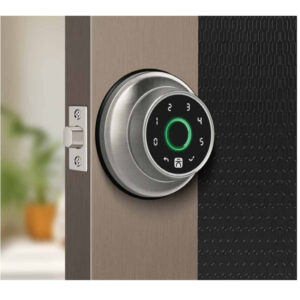
Listen up, folks – if you’re in the business of sourcing smart locks, you better have your rear end covered in titanium alloy when it comes to security liabilities. Let me tell you how next-gen tech is changing the game.
1. Introduction
The Rising Cost of Security Failures
The financial hemorrhage from smart lock breaches these days would make your CFO need smelling salts – we’re talking seven-figure settlements becoming the norm, not the exception. Recent cases show intrusion damages often exceed the product’s manufacturing cost by 300-500%, creating what security professionals call “the inverse value paradox.” And heaven help you if medical or defense facilities get compromised through your hardware – that’s when the feds come knocking with penalties that’ll make your shareholders wish they’d invested in pet rocks instead.
Why Smart Locks Represent a Liability Turning Point
We’re witnessing the IoT equivalent of the wild west transforming into a civilized society where security actually matters. The newest smart lock architectures implement what we in the biz call “defense in depth” – multiple overlapping security layers that create what’s essentially a digital moat filled with cryptographic alligators. This represents the first generation of devices where security is baked into the silicon rather than bolted on as an afterthought like some sad aftermarket car alarm from the 90s.
How This Guide Helps Procurement Decision-Makers
Consider this your survival guide through the minefield of IoT security procurement – we’ll show you how to spot the difference between marketing fluff and actual military-grade protection. From penetration testing protocols to supply chain hardening techniques, we’ve compiled the critical evaluation criteria that separate liability nightmares from properly secured revenue streams. And trust me, your legal team will thank you for reading this before they have to explain another breach to the board.
2. The Current Liability Landscape
Recent High-Profile Smart Lock Security Breaches
Remember that Las Vegas casino hack where they got in through an aquarium thermometer? Well guess what – poorly secured smart locks make even juicier targets. We’ve seen everything from Bluetooth spoofing attacks that pop doors like soda cans to firmware vulnerabilities allowing criminals to create master keys from thin air. The scary truth? Most breaches exploit known vulnerabilities that proper update mechanisms could’ve patched months prior – what we call “security negligence with extra steps.”
Legal Consequences Facing Brands in 2023
The legal eagles have sharpened their talons, folks – we’re seeing product liability lawsuits that would give your legal department hives. New precedents are being set where manufacturers are held responsible not just for initial flaws, but for failure to maintain continuous security updates. And don’t even get me started on GDPR fines – European regulators have developed a particular fondness for making examples out of IoT security laggards to the tune of 4% of global revenue.
Insurance Premium Increases for Vulnerable Products
Your insurance provider has probably started asking uncomfortable questions about your product’s security posture – and they’re not just being nosy. We’re seeing cyber insurance premiums for smart lock manufacturers increase 300% year-over-year when proper hardening measures aren’t implemented. Some carriers are even introducing “security deductibles” where the first $500K of breach costs come straight out of your pocket – enough to make any CEO reconsider their life choices.
3. Next-Gen Authentication Technologies
Biometric Evolution: Beyond Fingerprint Scanners
Forget what you know about smudgy fingerprint sensors—next-gen biometrics now analyze capillary patterns under your skin and 3D vein mapping, making spoofing attempts about as effective as a chocolate teapot. These systems use multispectral imaging to detect live tissue while compensating for dry or calloused fingers that’d make traditional sensors throw a hissy fit. And if you’re worried about fake fingers? New models detect micro-pulsations in blood flow—good luck tricking that with a latex mold, Mr. Bond.
Quantum-Resistant Encryption Protocols
Y’know that “uncrackable” encryption your marketing team loves bragging about? Well, quantum computing’s about to turn that claim into a punchline—unless your smart lock runs lattice-based cryptography. Unlike traditional RSA encryption (which a quantum computer could shred like wet tissue paper), these new algorithms rely on complex math problems even quantum brute-forcing can’t solve. And before you ask—no, this isn’t some sci-fi pipe dream; NIST has already standardized four quantum-proof algorithms for commercial use.
Behavioral Pattern Recognition Systems
Imagine your smart lock learning your habits so well that it notices when you normally grab coffee at 7:30 AM, versus when an intruder’s trying to jimmy the door at 3 AM with suspicious hesitation. These AI-driven systems don’t just look at what credentials are used, but how—measuring factors like typing rhythm, proximity timing, and even gait when approaching the door. If something’s off? The system can request step-up authentication or silently trigger an alarm—no muss, no fuss.
4. Tamper-Proof Hardware Innovations
Anti-Drill Nanocomposite Materials
Drill attacks used to be the bane of smart locks, but manufacturers are now embedding boron carbide particles into lock faceplates—a material so hard, it makes diamond-tipped bits weep. Even if a burglar manages to penetrate (fat chance), shape-memory alloys automatically deform to jam the mechanism, turning their drill into a glorified paperweight. Bonus: some models release non-toxic, UV-reactive dye upon tampering—perfect for identifying culprits under blacklight later.
Self-Healing Circuitry Components
Ever seen a smart lock fry itself because of moisture or a power surge? New self-healing polymers can actually repair microscopic circuit breaks by reforming conductive pathways—kinda like how your skin heals a scrape. These materials use ion transport mechanisms to bridge gaps in milliseconds, ensuring that minor electrical faults don’t turn into catastrophic failures. It’s the difference between a lock that dies at the first sign of trouble and one that shrugs off abuse like a Nokia 3310.
Faraday Cage-Integrated Lock Designs
Hackers exploiting Bluetooth and Wi-Fi signals? Modern locks now come with built-in Faraday cages—essentially a grounded metal mesh that blocks wireless signals when physically tampered with. No more relay attacks where thieves amplify your key fob’s signal from inside your house. These cages fail closed, ensuring the lock stays secure even if power is cut. Think of it as force field tech, minus the sci-fi sound effects.
5. Cloud Security Infrastructure
Zero-Trust Architecture for Smart Locks
Gone are the days when a single password could grant access to your entire system. Zero-Trust models require continuous verification—every command, every login attempt gets scrutinized like a bouncer at an exclusive club. Even if hackers steal credentials, microsegmentation prevents lateral movement, locking them out faster than they can say “data breach.”
Distributed Data Storage Solutions
Storing all your eggs (or in this case, access logs) in one cloud basket? That’s asking for trouble. Next-gen systems use sharding—splitting encrypted data across multiple locations so a single breach can’t expose the whole shebang. Combined with homomorphic encryption (which allows processing data without ever decrypting it), even a major cloud compromise leaves hackers with useless gibberish.
Real-Time Threat Monitoring Dashboards
Forget waiting for quarterly security reports. Modern dashboards give admins live heatmaps of abnormal activity, highlighting potential threats faster than you can yell “hacker.” Using predictive analytics, they flag suspicious patterns—like multiple failed access attempts or unusual time-of-day activity—before they escalate. And with automated incident response, the system can cut off compromised accounts faster than you can say “unplug it.”
6. Over-the-Air Update Capabilities
Automatic Security Patch Deployment
Let’s face it—waiting for users to manually update firmware is like expecting them to floss daily; noble in theory, disastrous in practice. Modern smart locks now use “vaccine-style” patch deployment, where critical updates install automatically during low-activity windows (say, 3 AM when even burglars are asleep). These silent updates leverage blockchain-verified signatures to prevent malicious spoofing, so you’re not accidentally installing “Firmware_Update_Definitely_Not_a_Virus.exe.”
Version Control for Regulatory Compliance
Different regions = different security laws = one big headache. New geofenced version control ensures your lock complies with local regs without any IT department heroics. Traveling from GDPR-land to a country with stricter data laws? The lock’s firmware will auto-adjust encryption standards faster than you can say “international data policy.” Bonus: Full audit trails mean no more sweaty-palmed compliance meetings.
Failed Update Rollback Mechanisms
Ever had an update brick your gadget? Smart locks now employ “time machine” backups—if a patch goes sideways, the system reverts to the last stable version before you can mutter a curse word. This fail-safe uses dual-bank memory architecture, keeping the working firmware intact while testing new updates in a digital sandbox. No more calls to customer support from locked-out homeowners.
7. Physical-Digital Hybrid Security
Mechanical Deadbolt Redundancy Systems
When the Wi-Fi’s down or the zombie apocalypse hits, you’ll thank us for “dumb-smart” hybrid locks. These use electromagnetic bolts for everyday convenience but retain a Grade 1 stainless steel deadbolt as backup. Even if a hacker disables the electronics, shear pins lock the mechanism physically—because sometimes, analog is the ultimate antivirus.
Silent Alarm Trigger Technologies
Forget blaring sirens that tell burglars to leg it. Modern locks can discreetly alert security teams while letting intruders think they’ve succeeded—like a digital honeypot. Tactics include:
- “Fake unlock” modes that appear functional while logging intrusion attempts
- Covert distress signals via powerline communication (through home wiring)
- Geofenced police alerts if the lock’s tampered with during preset “high-risk” hours
Location-Based Auto-Lock Protocols
Your phone leaves the geofence? Boom—doors lock behind you. Enter a “danger zone” (like a high-crime area)? The system temporarily disables Bluetooth unlocking, requiring PIN backup. These context-aware protocols use a cocktail of GPS, Wi-Fi triangulation, and even local crime data feeds to adjust security on the fly—no user input needed.
8. Supply Chain Security Measures
Secure Bootloader Implementation
A compromised supply chain can turn your smart lock into a Trojan horse. Solution: Cryptographically signed bootloaders that check every firmware update against locked-down manufacturer keys. Even if a hacker intercepts components mid-shipment, they can’t install malware without bricking the device—think of it as a digital “break seal” on medicine bottles.
Component-Level Authentication Chips
Counterfeit parts plague IoT manufacturers. New silicon fingerprints (physically unclonable functions, or PUFs) give each chip a unique identity based on microscopic manufacturing variations. These self-destruct if tampered with, making hardware spoofing as futile as photocopying a diamond.
Factory-to-Final-Product Verification
Blockchain isn’t just for crypto bros—it’s now tracking every screw and sensor in your smart lock’s journey. Suppliers log each component’s origin/test results to an immutable ledger, so you get a “birth certificate” for every device. Suspect foul play? Scan the QR code to see if that “military-grade bolt” actually came from a shady eBay seller.
9. Third-Party Integration Risks
API Security Certification Standards
Your lock’s only as strong as its weakest integration—like that janky third-party voice assistant. New “API hygiene” certifications (like IoT-SAFE) require partners to pass fuzz testing, rate limiting, and OAuth 2.0 compliance checks. No more “Move fast and break things” startups turning your product into a digital turnstile.
Partner Ecosystem Vulnerability Scoring
Think Credit Karma, but for security risks. Platforms like IoXT now assign “trust scores” to integrations based on:
- Patch response times
- Historical breach data
- Encryption protocols Now you can finally tell if that shiny new smart-home app is a gem or glorified spyware.
End-to-End Encryption Requirements
Data siphoned through a third-party cloud? Hard pass. Mandatory peer-to-peer encryption ensures sensitive communications (like temporary access codes) bypass intermediaries entirely. Even if a partner gets hacked, your users’ data stays as private as a vault—because some things shouldn’t be “shared responsibly.”
10. Future Frontiers: Where Smart Lock Security is Headed Next
The smart lock security arms race never sleeps. Here’s what’s coming down the pipeline—before your competitors even know it exists.
AI-Predictive Attack Mitigation
Forget reacting to breaches—tomorrow’s smart locks anticipate and neutralize threats before they happen. Imagine:
- “Hacker Playbooks” in Lock Firmware – The system learns from global cyberattack trends and proactively shields against emerging exploits.
- Deception Tech Integration – Fake “vulnerabilities” bait hackers into triggering alarms while real defenses stay hidden.
- Behavioral Sandboxing – If an unusual command sequence starts (e.g., rapid-fire unlock attempts), the AI isolates it like a lab virus before it spreads.
DNA-Based Biometric Verification
Fingerprints? So 2024. The next wave uses synthetic DNA markers (no, not a sci-fi fantasy—several startups are already testing it). How?
- A quick cheek swab or skin contact registers ephemeral DNA sequences (not your full genome, relax).
- The system constantly verifies against micro-skin flakes, sweat, or even exhaled aerosols—if it doesn’t match, no entry.
- Bonus? Self-destructing sample storage means no DNA database for hackers to raid.
Post-Quantum Cryptography (For When Quantum Hackers Arrive)
Quantum computing cracks today’s encryption like a walnut.** So what’s the backup plan?
- NIST-Approved Post-Quantum Algorithms: Already in testing phases, these algorithms (like CRYSTALS-Kyber) can withstand Shor’s Algorithm attacks.
- Hybrid Encryption Models: Future smart locks will use both classical and quantum-resistant keys—so even if one falls, the other holds.
- Self-Updating Crypto Protocols: As threats evolve, your lock’s encryption evolves with them—no manual patches needed.
Self-Destructing Secure Elements
James Bond-style “burn after reading,” but for IoT. Future smart locks will:
- Store encryption keys in volatile memory that wipes itself if tampered with.
- Use physically fragile circuitry that fractures if probed (hello, microscopic break-beams).
- Deploy “crypto-shredding”—rendering stolen data unreadable via instant key deletion.
Energy-Harvesting Security
No more worrying about dead batteries locking you out. Next-gen locks will:
- Scavenge power from RF signals, kinetic energy (door movements), or even ambient light.
- Run ultra-low-power secure elements that function for years on a coin cell.
- Automatically switch to mechanical fail-safe mode if power dips critically—no abrupt lockouts.
11. The Human Factor: Training Users (Because They’re the Weakest Link)
Tech can be Fort Knox—but users will still tape passwords to the door. Here’s how smart locks are fighting back against human error.
Gamified Security Training
Forget boring manuals. Modern setups use:
- “Hack the House” Simulations – Users earn rewards for spotting phishing attempts or setting proper permissions.
- Microlearning Alerts – Instead of a wall of security text, users get bite-sized tips (“Hey, your guest code expires in 24 hrs—renew or revoke?”).
- Behavioral Nudges – If someone tries to set “1234” as a PIN, the system playfully shames them into changing it.
AI-Powered Anomaly Coaching
Your lock knows when you’re being sloppy. Instead of nagging, it educates in real time:
- “You usually lock the door at 9 PM. It’s midnight—forgetting something?”
- “This access request comes from a new country. Confirm or deny?”
- “You’ve shared 5 temporary codes this month—time to review?”
Social Engineering Countermeasures
“Hi, this is IT support—just need your PIN to fix an issue.” Classic con. Future locks will:
- Detect voice mimicry using AI-trained vocal fingerprints.
- Require multi-channel verification (e.g., “Please confirm this unlock in-app and via SMS”).
- Offer “duress codes” that silently trigger alarms if entered under coercion.
12. Conclusion: The Unbeatable Smart Lock Checklist
Before you slap “military-grade security” on your next product, ask:
✅ Does it laugh at power drills, quantum hacks, and sketchy third-party apps? ✅ Can it survive user incompetence without becoming a brick? ✅ Will it still be secure in 2030—not just next fiscal quarter?
Because if the answer to any of these is “maybe,” well… hope the PR team’s ready for a data breach press conference.
13. The Ethical Dilemmas of Smart Lock Security (And How to Navigate Them)
As smart locks become more advanced, they also introduce complex ethical challenges. Here’s how to handle the murky waters without waking up to a privacy scandal.
The Data Collection Paradox
“To protect users, we must observe them—but how much is too much?”
- Solution: Privacy-by-Design Architecture
- Collect only minimal, anonymized data (e.g., “Door unlocked at 8:32 AM” instead of “Bob’s mistress entered at 8:32 AM”).
- Offer on-device AI so behavioral analytics never leave the home.
- Auto-delete logs after 30 days (unless legally required otherwise).
“If you don’t store it, you can’t leak it.”
Law Enforcement Backdoors (The Crypto Wars 2.0)
Governments will demand access “for safety.” Engineers will resist. How to comply without betrayal?
- Implement “Transparent Warrant Execution”:
- Require court orders to unlock, visible in the audit log.
- Use split-key encryption where police must get both user + manufacturer approval (no silent backdoors).
- If forced to comply? Sunset clauses ensure backdoors expire after investigations.
“A lock that lets anyone in isn’t a lock—it’s a revolving door.”
Social Equity: When Tech Leaves Vulnerable Users Behind
Not everyone has a smartphone, 5G, or steady electricity. How to avoid digital discrimination?
- Hybrid access mandates:
- Always include free offline methods (RFID cards, mechanical keys) for renters, elderly, or low-income users.
- Offer voice-based controls for visually impaired users.
- Support mesh-network syncing for rural areas with spotty internet.
“If security isn’t accessible, it’s just exclusivity in disguise.”
14. The “Unhackable” Fallacy (And What to Say When You’re Breached)
No system is perfect. The real test isn’t avoiding breaches—it’s handling them without collapsing.
Pre-Breach: The “Assume We’re Compromised” Mindset
- Red Team Drills: Pay hackers to attack your own locks annually.
- Bug Bounty Programs: Offer $100K+ rewards for ethical breaches—cheaper than a class action.
- Draft Press Templates Now (yes, now) because when things burn, nobody should be scrambling for PR words.
Post-Breach: The 48-Hour Survival Playbook
- Full Transparency – Disclose everything fast. No “we’re investigating” limbo.
- Compensation Over Apologies – Free hardware upgrades, identity monitoring, cash payouts.
- Public Exploit Breakdowns – Show users exactly how it happened & how you’re plugging holes.
“Trust isn’t built by never failing—it’s by owning failures faster than critics can tweet.”
15. The Ultimate Litmus Test: Would You Bet Your Life On It?
Before shipping any smart lock, engineers should ask:
- Would I install this on my own home?
- Would I trust it to protect my children?
- Could I defend its security on live TV with a hacker in the room?
If the answer isn’t “Hell yes” to all three—back to the lab.
16. The Smart Lock Arms Race: Offense vs. Defense in 2025+
Next-Gen Physical Attack Vectors (And How to Neutralize Them)
The battlefield moves beyond software – future lock breakers are getting creative:
Laser Bumping Attacks
- Threat: Micrometer-precision lasers mimicking mechanical key cuts
- Countermeasure: Vibration-detecting piezos that freeze mechanisms when interference is detected
EM Pulse Coercion
- Threat: Directed electromagnetic pulses triggering false unlocks
- Solution: Faraday cage shielding combined with EMP-hardened circuitry
Thermal Imaging Vulnerabilities
- Risk: Hackers using IR cameras to detect recently pressed keypads
- Fix: Randomized thermal dispersion layers in touch surfaces
When Encryption Isn’t Enough: The Rise of Physical Deception
Advanced locks are incorporating military-grade counterintelligence tactics:
• Dynamic Component Shuffling – Critical circuits physically reconfigure daily • Bait Mechanisms – Fake “easy targets” that trigger alarms when manipulated • Ceramic Memory Disks – Shatter into irreparable pieces upon intrusion
The Maintenance Trap: Why Firmware Updates Will Make or Break Security
The harsh truth: Most hacked smart locks fall through abandoned updates, not sophisticated breaches. Future solutions:
- Blockchain-Verified Updates – Checksums stored immutably, preventing supply chain attacks
- “Living Patch” Architecture – Micro-updates (under 3KB) deploy silently without reboots
- Graceful Degradation Modes – When outdated, locks automatically downgrade to simpler but still-secure protocols
17. Smart Lock UI: The Psychology of Effective Security
Designing for the Human Firewall
Great security that people bypass is worthless. UI innovations that actually work:
Cognitive Load-Aware Interfaces
- Simple mode for everyday users
- Expert toggle for granular controls (without overwhelming novices)
Behavioral Incentivization
- Visual satisfaction metrics (e.g., “Security Score: 92% – Top 5% of Users”)
- Progressive unlocking of features as users demonstrate security awareness
Stress-Tested UX Flows
- Disaster recovery that works when:
- User is panicked (break-in attempt)
- Sleep-deprived (3AM false alarm)
- Intoxicated (because realism matters)
18. The Future-Proofing Paradox
Why Tomorrow’s Secure Smart Lock Must Be Designed to Become Obsolete
The winning long-term strategy:
- Modular Threat Intelligence – Swap out attack pattern databases like magazine clips
- Quantum-Transition Blueprints – Pre-planned migration paths for upcoming crypto standards
- Ethical Sunsetting Protocols – Automatic shutdown features for when security can’t be guaranteed