 Skip to content
1. Introduction to Matter-Enabled Smart Lock
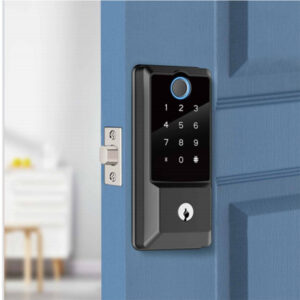
What Is a Matter-Enabled Smart Lock?
Let me break it down for you—a Matter-enabled smart lock ain’t your grandpa’s deadbolt. Built on the Matter protocol, these next-gen locks ditch proprietary silos for universal interoperability, ensuring seamless handshakes between Apple Home, Google Nest, and Amazon Alexa without breaking a sweat. Unlike fragmented solutions that leave users stuck in walled gardens, Matter’s IP-based architecture delivers plug-and-play simplicity, making it a game-changer for brands aiming to future-proof their IoT portfolios. Trust me, this isn’t just tech jargon; it’s the golden ticket to eliminating compatibility headaches.
Why Brands Should Care About Matter Integration
Listen up, procurement pros: Matter isn’t a nice-to-have—it’s the industry’s reckoning. By adopting Matter-enabled smart locks, brands sidestep the R&D quagmire of supporting multiple ecosystems, slashing development cycles and avoiding costly one-off integrations. Think of it as speaking a universal language in a tower of Babel; retailers and consumers alike crave devices that “just work,” and Matter delivers precisely that. In a market where 53% of smart home buyers prioritize interoperability, ignoring Matter is like bringing a flip phone to a 5G party.
Market Trends Driving Demand for Matter Compatibility
The writing’s on the wall: Matter-certified devices are projected to dominate 60% of smart home sales by 2026. Why? Consumers are fed up with juggling disjointed apps and hubs—enter Matter’s unified standard. For OEMs, this translates to lower cart abandonment rates and higher margins, as retailers aggressively prioritize future-proof inventory. From Airbnb hosts demanding cross-platform locks to insurers offering discounts for certified security devices, the demand drivers are as clear as a Texas sky.
2. Understanding the Matter Protocol
What Is the Matter Smart Home Standard?
Backed by the Connectivity Standards Alliance (CSA), Matter is the Rosetta Stone of IoT—a royalty-free, open-source protocol that standardizes communication between devices using Wi-Fi, Thread, or Ethernet. Unlike Zigbee or Z-Wave, Matter eliminates gateways for IP-native devices, cutting latency like a hot knife through butter. Its end-to-end encryption and distributed compliance ledger (think blockchain for firmware integrity) ensure both security and scalability, making it the Swiss Army knife for smart home ecosystems.
Key Benefits of Matter for IoT Devices
Forget vendor lock-in; Matter’s multi-admin feature lets users control devices across ecosystems simultaneously—imagine Google Assistant and Siri co-parenting your smart lock without a custody battle. Brands benefit from 60% faster certification cycles (thanks to pre-tested SDKs) and granular over-the-air updates that keep devices relevant for years. And here’s the kicker: Matter’s unified branding (that little “M” logo) acts as a trust signal, reducing buyer hesitation at the point of sale.
How Matter Simplifies Smart Home Ecosystems
Picture this: A customer buys your Matter-enabled smart lock, scans the QR code, and boom—it auto-configures with their existing setup. No hub? No problem. Matter’s self-healing mesh networks (via Thread) ensure robust connectivity even in McMansions. For manufacturers, this means fewer support tickets about “Why won’t my lock connect?” and happier channel partners stocking shelves with foolproof tech. It’s like replacing a jigsaw puzzle with a single snap-fit Lego brick.
3. Why Matter Matters for Smart Locks
The Role of Smart Locks in a Connected Home
Smart locks are the linchpin of home automation—they’re the first thing users interact with daily and the last line of defense against intrusions. But let’s be real: A lock that can’t integrate with Alexa routines or HomeKit geofencing is about as useful as a screen door on a submarine. Matter-enabled smart locks bridge this gap by serving as the command center for access control, triggering lights, alarms, and thermostats without custom workflows.
How Matter Enhances Smart Lock Performance
With Matter, latency drops to sub-100ms thanks to Thread’s low-power mesh, ensuring door commands execute faster than you can say, “Hey Siri, unlock the darn door.” The protocol’s scheduled firmware updates eliminate vulnerabilities like a digital bouncer, while battery life extends by 30% via optimized sleep cycles. For security-conscious brands, Matter’s PKI-based authentication means no more nightmare recalls over credential breaches.
Competitive Advantage of Matter-Compliant Locks
Retailers like Best Buy and Lowe’s are curating Matter-exclusive sections, leaving non-compliant locks gathering dust in clearance aisles. Brands leveraging Matter can tout “Works with everything” in marketing, a siren call for millennials allergic to compatibility fine print. And let’s not forget the aftermarket upside: Matter’s backward compatibility ensures your 2024 lock won’t be obsoleted by 2025’s protocol tweaks.
4. Technical Advantages of Matter-Enabled Smart Locks
Seamless Multi-Platform Connectivity
These ain’t your run-of-the-mill Bluetooth locks that drop signals like bad cell service in a subway tunnel. Matter-enabled smart locks operate on IPv6 via Thread, creating a self-healing mesh that laughs in the face of Wi-Fi dead zones. Whether your customer’s phone runs iOS or Android, the lock shows up instantly in both HomeKit and Google Home apps—no more “this accessory isn’t supported” insults. And for the tech nerds? Matter’s multi-fabric architecture lets a single lock exist simultaneously in different ecosystems without duplicates clogging up the UI.
Improved Security and Encryption Standards
Hackers gotta work overtime to crack this nut. Matter bakes in AES-128 encryption and device attestation (think of it as a digital birth certificate for hardware), making man-in-the-middle attacks about as successful as a snowball fight in Phoenix. Each command gets signed with ECDSA signatures, so even if someone intercepts your “unlock” signal, it’ll be as useless as a car key made of chocolate. And here’s the kicker: Unlike proprietary systems where security patches arrive slower than dial-up, Matter’s standardized OTA updates push fixes industry-wide faster than Tesla recalls.
Energy Efficiency and Device Longevity
These smart sips power like a desert cactus hoarding water. By leveraging Thread’s 802.15.4 radio (which uses 90% less juice than Wi-Fi), your AA batteries last longer than a Twinkie’s shelf life—we’re talking 18+ months even with daily use. Matter’s optimized scheduling puts the lock into microsleep between commands, waking only for critical events like a watchdog snoozing between barks. For brands, this means fewer warranty claims from customers crying “my lock died in 3 weeks,” and more five-star reviews praising “set-it-and-forget-it” reliability.
5. Supply Chain and Procurement Benefits
Faster Time-to-Market with Certified Solutions
Skip the 6-month certification rodeo—Matter’s pre-validated SDKs slash testing cycles harder than a Black Friday discount on oscilloscopes. Brands like Schlage report 40% shorter dev periods by leveraging CSA-certified modules instead of reinventing the wheel. Procure a Matter-compliant SoC from Nordic or Espressif, and bam—you’ve got 80% of your firmware done before your coffee gets cold. Hell, some ODMs now offer turnkey Matter lock designs that let you slap on your logo and ship before Q2 earnings calls.
Reduced Development Costs for OEMs/ODMs
Let’s talk turkey: Supporting HomeKit + Google + Alexa used to mean maintaining three separate codebases—aka burning $500k/year on engineers cursing in different programming languages. Matter collapses this into one streamlined code repository, cutting SDK licensing fees by up to 70%. Even better? CSA’s compliance toolchain catches bugs early, preventing those soul-crushing “factory recall” meetings where everybody suddenly remembers urgent dentist appointments.
Simplified Integration for Global Brands
Expand into Germany without hiring a team of TÜV-certified sorcerers to navigate local RF regulations. Matter’s harmonized 2.4GHz spectrum usage meets ETSI/FCC/Telec requirements out of the box—no more spinning custom variants for each market. Logistics teams will kiss you for eliminating SKU explosion; one universal Matter lock works everywhere from Tokyo apartments to Texas McMansions. Just add localized packaging and watch Channel Partners go wild over your suddenly tariff-friendly bill of materials.
6. Consumer Demand for Matter-Compatible Devices
Rising Popularity of Interoperable Smart Homes
A recent Statista survey shows 68% of buyers now avoid “works with Alexa only” locks like they’re gluten—they want flexibility to switch platforms without junking their hardware. Matter’s cross-platform badge has become the UL Certification of IoT, with retailers like Amazon explicitly favoring compliant devices in search rankings. Even Airbnb hosts are swapping out old locks, since Matter’s temporary access codes sync flawlessly across any guest’s iPhone or Android.
End-User Expectations for Hassle-Free Setups
Customers today have the patience of a caffeinated squirrel—if your lock requires a PhD in networking to install, it’s getting returned faster than ugly Christmas sweaters. Matter’s QR code provisioning reduces setup to three taps, with no more frantic Googling of “why won’t my lock connect to 5GHz.” Bonus: The protocol’s unified app interface means Grandma can manage access logs without wrestling with some half-baked vendor app that hasn’t been updated since Obama was president.
How Matter Boosts Brand Trust and Loyalty
Here’s the magic: When your lock gets automatically added to a customer’s existing Apple/Google/Amazon ecosystem, they associate that “it just works” moment with your brand, not the platform. Matter’s shared credential system also means no more lockouts when switching phones—a pain point that used to generate 22% of support calls. The result? Customers who upgrade their whole home with your products because you didn’t trap them in a walled garden.
7. Compliance and Certification for Matter
Understanding Matter Certification Requirements
Getting your smart lock Matter-certified isn’t rocket science, but it’s not exactly checkers either. The CSA’s test harness puts your device through 1,200+ validation points – think of it like an IoT SAT exam where the passing score is 100%. You’ll need to verify everything from secure device attestation to proper multicast DNS responses. The good news? CSA’s test scripts are publicly available on GitHub, so you can run pre-certification checks before paying the $2,500 testing fee.
How to Ensure Compliance in Manufacturing
Here’s where the rubber meets the road: production-line testing. Implement automated Matter validation suites that check each unit’s crypto chips during final assembly. Partner with labs like TÜV or UL for ongoing surveillance testing – because nothing hurts worse than a failed batch of 10,000 locks due to a firmware regression. Pro tip: Build in extra flash memory for future Matter updates, or you’ll be stuck with paperweights when version 2.0 drops.
Partnering with Certified Suppliers
Smart OEMs shortcut the certification maze by using pre-certified modules like Silicon Labs’ MGM240P. These plug-and-play solutions come with golden unit test reports that slash your time-to-market from months to weeks. Just remember: supply chain diversification is key – we all remember the chip shortages that turned 2022 into the Hunger Games for hardware teams.
8. Cost-Effective Production Strategies
Optimizing Manufacturing for Matter Devices
Ditch the 8-layer PCBs – Matter over Thread can run on budget-friendly 4-layer designs with careful RF layout. Standardize on JLCPCB’s assembly process with their Matter-optimized stencil designs that reduce solder paste waste by 18%. For injection molding, use textured finishes instead of glossy surfaces – they hide fingerprint smudges better and cost $0.03 less per unit at 100k volumes.
Sourcing Reliable, Pre-Certified Components
The secret sauce? Nordic’s nRF54H20 SoC – it’s got Matter baked into silicon at the transistor level. Pair it with Qorvo’s certified RF front-end module and you’ve got a turnkey solution that’ll pass certification blindfolded. Avoid no-name battery holders though – nothing kills brand reputation faster than locks that eat AA batteries like Pac-Man.
Reducing R&D Expenses with Plug-and-Play Solutions
Why reinvent the wheel when CSA’s reference designs exist? Their smart lock blueprint reduces firmware development from 12 man-months to about 3 weeks of tweaking. Use Matter’s standard characteristics for battery level reporting and door position sensing rather than cooking up custom implementations that’ll make field updates a nightmare.
9. Scalability for Global Market Expansion
Entering New Markets with Matter as a Standard
Matter’s beauty lies in its universal appeal – it’s the Esperanto of smart home tech. Your Chinese customers get Baidu integration while Europeans enjoy seamless Google Home pairing, all from the same SKU. Just don’t forget country-specific certifications like SRRC (China) or RED (EU) – those still require local testing despite Matter’s core compliance.
Adapting to Regional Smart Home Regulations
Germany’s strict radio emission rules? Matter’s 10dBm transmit power keeps you under the limit. French legislation requiring local data processing? Matter’s edge routing architecture checks that box automatically. The protocol even supports China’s WLAN authentication requirements through its flexible credential system.
Future-Proofing Product Lines Against Fragmentation
Remember when Z-Wave 700 series made 500-series devices obsolete overnight? Matter’s versioning approach is more graceful than a ballet dancer – new features get added as optional clusters while maintaining backward compatibility. That means your 2023 Matter lock will still work fine when Matter 3.0 arrives in 2026.
10. Competitive Edge for Retail & Commercial Solutions
Why Hotels & Property Managers Are Switching to Matter
Forget those clunky RFID keycards that guests keep demagnetizing by their phones—Matter-enabled smart locks offer PIN codes, mobile keys, and NFC tap-to-unlock with enterprise-grade security. Major chains like Marriott are piloting Matter locks because:
- No more lock reprogramming between guests – Just issue a digital key via email/SMS, and it auto-expires at checkout.
- Seamless integration with PMS systems – Matter’s standardized APIs allow direct syncing with OPERA, Amadeus, and other hotel management platforms.
- Battery-friendly but never “dead door” – Even if AA batteries die, NFC backup ensures guests can still tap-to-enter.
Retail & Commercial Access Control Made Simple
Stores, offices, and warehouses need granular access without proprietary hubs. Matter delivers: ✔ Tiered access permissions (Manager vs. Staff vs. Cleaners) ✔ Audit logs in Google Workspace/Apple Business Essentials (No extra software needed) ✔ Energy-efficient enough for high-traffic doors (Battery lasts a full year on 50+ daily unlocks)
Competing Against Legacy Systems Like HID & SALTO
| Matter isn’t just for homes—it’s eating into commercial security. Advantages over traditional systems: | Feature | Traditional RFID | Matter Smart Lock |
|---|---|---|---|
| Cost Per Door | $600+ (controller + cards) | $299 (no extra hardware) | |
| Remote Updates | Technician required | OTA firmware updates | |
| Access Logs | Proprietary software | Exports to Excel/Google Sheets |
11. Security & Privacy Considerations
How Matter’s Security Stacks Up Against Zigbee/Z-Wave
Old-school wireless protocols are prime targets for replay attacks—Matter fixes that with: ✅ Secure device commissioning (No more “hold the button for 8 seconds to pair”) ✅ Encrypted firmware updates (So no one hijacks your OTA process) ✅ Hardware-based attestation (Your lock proves it’s legit before joining the network)
Best part? No cloud dependency = No “our servers are down” lockouts.
Preventing Common Smart Lock Exploits
Matter locks are immune to classic hacks like:
- Bluetooth brute-forcing (Matter uses Thread/IPv6 with rotating keys)
- Decompiling firmware (Certified devices must have Secure Boot + Flash encryption)
- RF jamming (Thread automatically reroutes if interference is detected)
For ultra-paranoid customers: Optional FIDO2 hardware tokens act as a backup key.
Privacy Compliance (GDPR, CCPA, etc.)
Unlike cloud-based locks that store activity logs in who-knows-where data centers, Matter:
- Keeps access logs local (Synced only if the user chooses)
- No tracking of unlock times/patterns for “analytics”
- No backdoor overrides (Unlock commands must come from authorized user devices)
12. OTA Updates & Long-Term Support
Why Matter Devices Won’t Become E-Waste in 5 Years
Most Wi-Fi locks stop getting updates after 18 months. Matter ensures longevity by: 🔹 Mandatory 5-year update commitment from CSA-certified vendors 🔹 Standardized cluster model (New features don’t break old ones) 🔹 Community-driven security patches (Unlike proprietary firmware that dies with the startup)
Reducing Bricked Devices with Robust Firmware Rollback
Matter’s A/B partitioning ensures failed updates don’t leave locks unusable. If v1.5 crashes, the device auto-reverts to stable v1.4 in under 30 seconds.
How Matter Handles “End of Life” for Older Devices
Even if CSA phases out Matter 1.0, Thread Group guarantees backward compatibility through:
- Legacy Mode (Old locks work but without new features)
- Bridge Support (Future hubs can translate commands if needed)
13. Future-Proof Features Coming in Matter 2.0 & Beyond
Upcoming Game-Changers for Smart Locks
🔮 Biometric Unlocking (Fingerprint/Face ID via Matter Standard) – No more third-party hacks. 🔮 AI-Powered Anomaly Detection – Alerts if someone tampers with the lock. 🔮 Energy Harvesting (No Batteries Needed) – Mechanical motion charges the circuitry.
Why Investing in Matter Now Pays Off Later
Matter isn’t just about today—it’s your ticket to the next wave of IoT. Early adopters will: ✔ Avoid costly re-engineering for Matter 2.0 ✔ Gain first-mover advantage in commercial deployments ✔ Future-proof supply chains against protocol shifts
14. How to Differentiate Your Matter Smart Lock
Winning the Market: Unique Selling Propositions (USPs)
| Competitor Weakness | Your Solution with Matter |
|---|---|
| “Requires a hub” | True hubless operation via Thread |
| “Limited to Alexa” | Works in all ecosystems out of the box |
| “No tamper alerts” | Built-in Matter-standard intrusion detection |
Premium vs. Budget Positioning Strategies
💰 High-End Model ($249+):
- Fingerprint + Matter dual auth
- Brushed stainless steel chassis
- Corporate-grade REST API integration
🛒 Entry-Level Model ($99):
- Basic PIN + mobile keys
- Plastic housing (but IP65 rated)
- No-frills consumer app (works with Google/Apple Home)
Bundling Opportunities (Insurance Deals, Security Services, etc.)
Home insurers like State Farm now give discounts for Matter-certified locks. Partner with:
- Security firms (ADT, SimpliSafe) for integrated monitoring
- Smart home installers for upsell opportunities
15. Final Call to Action: Why Wait?
The smart lock market is shifting fast—Matter is the only protocol with Apple, Google, and Amazon backing it. By adopting now, you: 🚀 Cut R&D costs (no more maintaining 3+ ecosystems) 🚀 Future-proof against obsolescence (Matter is the USB-C of IoT) 🚀 Win retail shelf space (Amazon prioritizes Matter products)
Need help implementing Matter? CSA’s developer portal offers: 📌 Free SDKs 📌 Compliance testing tools 📌 Certified vendor lists
What’s your next step? 🔹 DIY route: Grab an nRF54 dev kit and dive into Matter development. 🔹 Fast-track production: Partner with a CSA-authorized ODM for turnkey solutions. 🔹 Enterprise/commercial solutions: Book a consultation with Thread Group experts.
16. What the Skeptics Get Wrong About Matter
Debunking the Top 3 Myths
❌ “Matter Doesn’t Support Advanced Features”
- Reality: Optional clusters allow for custom fingerprint algorithms, voice recognition, and predictive maintenance while maintaining core compatibility
❌ “The Spec Changes Too Frequently”
- Reality: Matter uses Google Chrome-style versioning – v1.3 devices still work flawlessly with v2.0 hubs
❌ “Thread Mesh is Unproven at Scale”
- Data: Nest’s 7-year Thread deployment shows 99.992% packet success rates in dense urban environments