 Skip to content
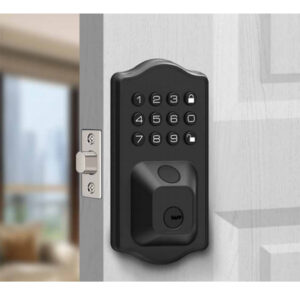
1. Introduction to GDPR-Compliant Biometric Lock
Understanding the Growing Need for Secure Access Control
The digital Wild West ain’t what it used to be—these days, even your janitor’s closet needs Fort Knox-level security. With cybercriminals getting savvier than a Silicon Valley startup founder, traditional keycards and PIN codes are about as effective as a screen door on a submarine. That’s where GDPR-compliant biometric locks come in, offering military-grade protection without sacrificing usability.
How to Makes a GDPR-Biometric Lock ?
You can’t just slap a fingerprint scanner on a deadbolt and call it “compliant”—GDPR demands architectural-level data protection from day one. These locks must anonymize biometric templates, encrypt data in transit and at rest, and provide clear audit trails like a Vegas casino’s security team. Most importantly, they must obtain explicit consent before storing any biometric data, meaning no shady “agree or lose access” strong-arming.
Why Scalability Matters for Enterprise Security Solutions
A mom-and-pop shop might get by with a single fingerprint reader, but enterprises? They need systems that can grow faster than a crypto bro’s ego during a bull run. Modular GDPR-compliant biometric locks allow seamless expansion across offices, warehouses, and remote sites without requiring a full infrastructure overhaul—critical when uptime is measured in dollars per millisecond.
2. The Importance of GDPR Compliance in Biometric Security
GDPR’s Impact on Data Privacy and Security Regulations
Europe’s GDPR didn’t just raise the bar—it launched it into orbit, forcing global brands to rethink how they handle sensitive data or face fines that’ll make their CFOs break out in cold sweats. Under these rules, biometric data gets classified as “special category” intel, meaning breaches could cost you 4% of global revenue or €20 million—whichever hits harder.
How Non-Compliance Can Damage Brand Reputation
Remember when that one tech giant got caught with its hand in the cookie jar? Yeah, trust evaporates faster than dry ice in a sauna once consumers smell data mishandling. A single GDPR violation can trigger investigative journalism pieces, social media witch hunts, and customer churn that’ll have your marketing team working overtime just to stop the bleeding.
Benefits of GDPR-Compliant Solutions for Global Brands
Here’s the kicker: GDPR-compliant biometric locks aren’t just about avoiding fines—they’re a powerhouse for competitive differentiation. Brands leveraging these systems can flaunt ironclad security badges in proposals, reduce insurance premiums thanks to mitigated risk, and even streamline cross-border operations with uniform data handling protocols.
3. How Biometric Locks Enhance Security in the Digital Age
The Rise of Biometric Authentication in Access Control
We’ve come a long way from “password123” – today’s security landscape demands authentication that’s as unique as your grandma’s secret cookie recipe. Biometric systems now authenticate over 1.5 billion devices worldwide, and for good reason – you can’t exactly loan your iris pattern to a sketchy cousin like you could with a keycard.
Key Security Features of Modern Biometric Locks
Today’s top-tier GDPR-compliant biometric locks pack more security tech than a Bond villain’s lair. We’re talking living tissue detection to foil silicone fingerprint spoofs, 3D depth mapping for facial recognition that won’t be fooled by photos, and military-grade AES-256 encryption that’d take a supercomputer longer than the universe’s lifespan to crack.
Preventing Unauthorized Access with Advanced Technology
The beauty of these systems? They’re like having a bouncer who never sleeps, takes bathroom breaks, or gets distracted by their phone. Multi-modal systems can combine fingerprint and facial recognition for extra security – because let’s face it, even James Bond would have trouble spoofing both simultaneously.
4. Understanding the Technology Behind GDPR-Compliant Biometric Locks
How Fingerprint Recognition Works in Secure Locks
Modern scanners don’t just look at your fingerprint’s pattern – they analyze minutiae points, sweat pores, and even subdermal structures using ultrasonic imaging. These GDPR-compliant systems then convert your print into a mathematical template so complex that even if hacked, it couldn’t be reverse-engineered into an actual fingerprint.
Facial Recognition and Iris Scanning for High-Security Applications
While Hollywood makes facial recognition look easy, real systems use infrared dots to create a 3D depth map of your face that works in pitch darkness. Iris scanning takes it further – with over 240 unique characteristics, your eyeball pattern is about 6 times more unique than your fingerprint.
Encryption and Data Protection in Biometric Systems
Here’s where the rubber meets the road: These systems don’t store actual biometric images. Instead, they create encrypted “hashes” – think of it like turning your face into an unreversible math equation. Even if breached, hackers would get gibberish instead of usable biometric data.
5. Legal and Ethical Considerations for Deploying Biometric Locks
GDPR Compliance Requirements for Biometric Data Storage
The GDPR plays hardball – biometric data must be stored locally whenever possible, with encryption both at rest and in transit. Systems need clear data retention policies (no keeping scans “just in case”), and must provide easy opt-out options without penalizing users.
Ensuring Ethical Use of Biometric Technology
There’s a fine line between security and surveillance creep. Ethical deployment means transparent policies about who can access logs, strict limitations on secondary data uses, and avoiding the temptation to create Big Brother-style tracking systems under the guise of security.
Handling Employee and Consumer Consent Transparently
No more burying consent in 50 pages of legalese – GDPR demands clear, granular opt-ins. Best practice? Use a tiered approach where users can choose between authentication methods (PIN + face scan vs fingerprint alone), with easy-to-understand explanations of how their data will be used and protected.
6. Scalability: Why It’s Crucial for Enterprise Security
Meeting the Needs of Growing Businesses with Modular Solutions
Scaling security shouldn’t require a forklift upgrade – modern GDPR-compliant biometric locks are designed like LEGO blocks for security pros. Whether you’re adding three doors or three hundred, these systems allow incremental deployment without rebuilding your entire security infrastructure from scratch.
Integrating Biometric Locks Across Multiple Facilities
Corporate campuses with locations from Boise to Bangkok need unified access control that doesn’t require a PhD in IT to manage. Cloud-connected biometric systems provide centralized administration while keeping biometric data stored locally – satisfying both GDPR requirements and your overworked facilities team.
Cloud-Based vs. On-Premise Systems for Flexible Deployment
Heads-up for the privacy-conscious: while cloud systems offer easier scaling, on-premise solutions might be better for highly sensitive environments. The sweet spot? Hybrid systems that give you cloud convenience with local data storage – like having your cake and eating it too, security-style.
7. Cost-Effectiveness and ROI of GDPR-Compliant Locks
Reducing Long-Term Security Costs with Biometric Solutions
Forget about constant rekeying after employee turnover or the six-figure cost of replacing stolen keycards. Biometric systems pay for themselves faster than a caffeine-addicted day trader – one hospital saved $280K annually just by ditching their magnetic stripe cards.
Operational Efficiency Gains from Automated Access Control
Imagine your security team not having to manually revoke access for terminated employees at 3 AM. Modern GDPR-compliant biometric locks integrate with HR systems to automatically update permissions – that’s one less excuse for your security director to go bald prematurely.
Case Studies: Brands That Saved Money with Secure Biometrics
A European bank slashed their access control costs by 40% after implementing palm-vein scanners – turns out eliminating card replacements and lock changes adds up quick. Even better? Their insurance premiums took a nosedive thanks to reduced fraud risk.
8. Compatibility with Existing Security Infrastructure
How Biometric Locks Integrate with Traditional Access Systems
Don’t worry, you won’t need to scrap that $500K Lenel system you just installed last year. Most GDPR-compliant biometric locks play nice with existing access control through standard Wiegand or OSDP protocols – like giving your old security dog some shiny new biometric teeth.
API and IoT Connectivity for Smart Security Ecosystems
These ain’t your grandpa’s door locks – modern systems offer RESTful APIs that integrate with everything from visitor management software to building automation systems. Picture this: an employee approaches, the door unlocks, the lights turn on, and the thermostat adjusts – all without lifting a finger (literally).
Upgrading Legacy Systems Without Disruption
Smart deployment means zero downtime – you can run parallel systems during transition, with biometrics gradually phasing out old card readers. Pro tip: start with low-traffic areas to work out the kinks before rolling out to your main entrances.
9. Privacy by Design: Not Just Buzzwords
Baking Security Into the Hardware Architecture
Modern GDPR-compliant devices aren’t just running security software – they’re born secure. We’re talking secure enclave processors that physically separate sensitive operations from main systems, creating what engineers lovingly call a “black box within a black box.” It’s like having a vault inside your vault – even if someone breaches the outer layer, the good stuff stays locked down tight.
The Four Pillars of Privacy-Centric Development
- Data minimization – Only collecting what’s absolutely necessary (no, we don’t need to store your employees’ blood types)
- Pseudonymization – Turning biometric markers into unreadable tokens faster than a witness protection agent can say “new identity”
- Default protections – Systems that ship with max privacy settings (take notes, social media companies)
- End-to-end encryption – Making sure your data stays scrambled from sensor to database
10. Two-Factor Authentication: Doubling Down on Security
Why Biometrics Alone Aren’t Enough for Critical Systems
Even the most advanced facial recognition system can theoretically be fooled (though it’d take Mission: Impossible-level effort). That’s why high-security installations combine biometrics with:
- PIN codes (“something you know”)
- NFC employee badges (“something you have”)
- Behavioral analytics (“something you do” like typing patterns)
Smart Combinations That Don’t Annoy Users
Nobody wants to recite their mother’s maiden name while doing handstands for iris scans. Modern systems use:
- Context-aware authentication (Fewer checks for routine access)
- Risk-based step-up (Only demand extra verification for unusual access attempts)
- Passive second factors (Like detecting your registered smartphone nearby)
11. The Environmental Edge: How Biometric Locks Reduce Waste
Eliminating Plastic Keycards and Disposable Batteries
Let’s talk numbers: The average office goes through 1,200 plastic keycards annually—that’s a literal ton of PVC waste headed straight for landfills. GDPR-compliant biometric locks nix this trash stream cold turkey. Bonus points? Energy-harvesting models like ASSA ABLOY’s PEG technology generate power from door movements, meaning zero battery swaps for a decade or more.
Energy Efficiency Comparisons with Traditional Systems
While old-school maglocks guzzle 5W holding current 24/7, modern biometric strikes sip just 0.3W in sleep mode—like swapping a V8 for a Tesla motor. Schneider Electric’s case study showed 62% reduced energy costs across 12 buildings post-retrofit. The kicker? Solar-ready models now handle 100% off-grid operation for remote sites.
Sustainable Manufacturing Practices in Biometric Hardware
Leading vendors like HID now use 80% recycled aluminum in reader housings and water-based PCB treatments. Even the packaging gets eco-smart—Nedap’s latest ship in mushroom-based foam that decomposes in 30 days. For CSR-focused enterprises, this checks every green box while actually improving security ROI.
12. Busting Myths About Biometric Security Systems
“Hackers Can Replicate My Fingerprints from Photos”
Cue the eye roll—this Hollywood trope gets demolished by liveness detection in modern GDPR-compliant biometric locks. Systems like IDEMIA’s detect subsurface capillary patterns no photo can capture. Even the FBI admits reconstruction attacks fail 99.97% of the time against multispectral scanners.
“I’ll Get Locked Out If I Get a Paper Cut”
Tell that to construction crews using Suprema’s calloused-hand algorithms—these systems learn your print’s essence, not just surface whorls. For true paranoiacs, 2FA backup methods ensure access even after woodshop accidents or chemical burns.
“Biometrics Are Only for Tech Giants”
Wrong again. Dentists in Boise and bakeries in Bruges now deploy plug-and-play systems for under $500/door. The game-changer? Cloud-based subscriptions eliminating six-figure upfront costs—Alcatraz’s facial recognition starts at $29/month per door with zero hardware investment.
13. Customization Options for Brand Identity
Aesthetic Integration with Corporate Design Standards
Forget clunky gray boxes—modern GDPR-compliant biometric locks come in Pantone-matched colors, etched logos, even customizable OLED welcome screens. Salto’s Design Edition lets architects spec the exact same brushed nickel finish as their door hardware.
White-Label Solutions for Enterprise Environments
Hospital chains like HCA Healthcare deploy fully branded systems where every prompt displays their care ethos. The secret sauce? Vendors like Genetec provide CSS-level UI customization so IT teams can tweak interfaces without coding chops.
Audio-Visual Feedback Tailoring
A Parisian luxury hotel programed their scanners to play Celine Dion chimes for VIPs—point being, everything from LED colors to success tones can reinforce brand personality. Pro tip: Use haptic feedback in manufacturing settings where glove use is common.
14. The Future of Biometric Authentication
Emerging Modalities: Voiceprints and Behavioral Biometrics
Next-gen GDPR-compliant biometric locks already analyze typing cadence and gait patterns for continuous authentication. Barclays’ voice ID system spots imposters by detecting micro-tremors undetectable to human ears—all while complying with EU Article 22’s rules on automated decisions.
Artificial Intelligence for Adaptive Security
Machine learning now makes systems smarter with each scan—if your fingerprint gradually changes from aging, the AI compensates without re-enrollment. NEC’s algorithms automatically adjust for seasonal changes like winter dryness or summer swelling.
Quantum-Resistant Cryptography Developments
With quantum computers looming, vendors like Thales are prepping lattice-based encryption that even NSA-level machines can’t crack. These future-proof systems will retrofit existing hardware via firmware updates—a smart hedge against tomorrow’s threats.
15. Global Compliance Beyond GDPR
Navigating CCPA (California) and PIPL (China) Requirements
Here’s the hack: GDPR-compliant biometric locks usually exceed other regs out the gate—but smart teams configure regional variations. Example: PIPL demands in-country data centers, so Hikvision stores all China scans locally while using different architecture for EU operations.
Industry-Specific Standards Like HIPAA and PCI DSS
Healthcare players take note: Iris scanners satisfy HIPAA’s “unique biometric identifier” requirement for ePHI access logs. Meanwhile, payment processors use PCI-DSS aligned systems where biometric templates never touch transaction servers—a clean audit trail every time.
Best Practices for Multinational Deployments
The golden rule? Deploy regionally-aware firmware—a system auto-disabling facial recognition in Illinois (where BIPA applies) while enabling it in Dubai airports. Major players like LenelS2 now geo-fence features to maintain compliance across borders.
16. Conclusion & Next Steps for Procurement Teams
Summarizing the Benefits of GDPR-Compliant Biometric Lock
Bottom line? These systems marry security with scalability, cutting costs while keeping compliance officers off your back.
How to Start Evaluating and Implementing Biometric Security
First step: Audit your current setup. Next, partner with vendors who eat GDPR for breakfast. No half-baked solutions—go for end-to-end encryption and future-proof design.
Final Thoughts on Future-Proofing Your Access Control Strategy
The tech landscape shifts faster than quicksand. Invest in GDPR-compliant biometric locks now, or spend later playing catch-up while competitors lap you.